


How to Choose the Right Packaging Boxes Manufacturer for Your Business
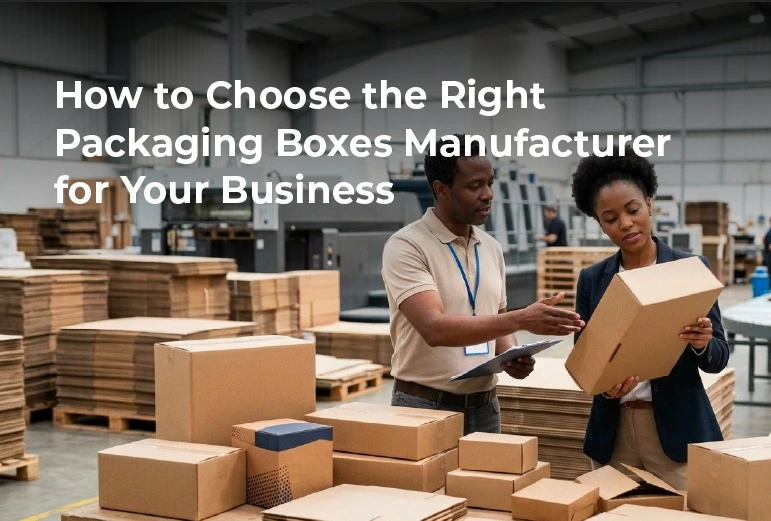
Selecting a packaging supplier is a commercial decision that affects production efficiency, logistics, customer satisfaction, and brand reputation. Packaging boxes protect products throughout storage, transportation, and retail distribution, but their value extends far beyond protection. The quality, consistency, and functionality of packaging influence operating costs, inventory management, product presentation, and purchasing decisions.
Nigeria's manufacturing, retail, agriculture, pharmaceutical, FMCG, and e-commerce sectors continue to expand, increasing demand for reliable packaging solutions that meet industry standards while supporting efficient supply chains. As a result, businesses are placing greater emphasis on working with established packaging companies in Nigeria that can deliver durable products, consistent quality, and dependable production schedules.
The right manufacturer does more than produce boxes. It becomes a long-term production partner that aligns with operational requirements, strengthens brand identity, and adapts as production volumes increase. Understanding how to evaluate packaging manufacturers helps businesses avoid unnecessary costs, reduce product damage, and build a more resilient supply chain.
Why Choosing the Right Packaging Manufacturer Matters
Packaging directly influences every stage of the product journey, from the production floor to the final customer. A manufacturer that consistently delivers high-quality packaging contributes to operational efficiency, protects valuable products, and supports long-term business growth.
Product Safety and Protection
The primary purpose of packaging is to protect products against impact, compression, moisture, dust, and handling during storage and transportation. Weak or poorly manufactured boxes increase the likelihood of damaged goods, leading to financial losses, product returns, and dissatisfied customers.
A reliable packaging manufacturer produces boxes using appropriate materials, accurate structural designs, and consistent manufacturing standards to ensure products arrive in excellent condition regardless of the shipping distance or storage duration.
Brand Presentation
Packaging is often the first physical interaction customers have with a product. Clean printing, precise finishing, and well-constructed boxes communicate professionalism and reinforce confidence in the quality of the product inside.
Businesses investing in professionally manufactured packaging build stronger brand recognition and present a consistent image across retail shelves, distribution channels, and online deliveries.
Customer Satisfaction
Customers expect their products to arrive in perfect condition, with secure, professional packaging that reflects the brand quality. Packaging failures immediately affect customer confidence, even when the product itself meets expectations.
Strong, attractive packaging improves the unboxing experience, reduces complaints, and adds to positive customer perceptions that encourage repeat purchases.
Cost Efficiency
Packaging quality directly impacts operational costs. Boxes that collapse during transportation or fail to protect products increase replacement expenses, freight losses, and customer service costs.
Working with an experienced manufacturer reduces these risks through durable packaging solutions designed for efficient stacking, storage, and transportation. Over time, improved packaging quality reduces operating costs and increases profitability.
Reliable Supply Chain
Consistent packaging availability is essential for uninterrupted production. Delays in packaging supply can halt manufacturing, postpone deliveries, and affect customer commitments.
Established manufacturers maintain organised production schedules, sufficient manufacturing capacity, and dependable delivery systems that help businesses maintain inventory levels and meet market demand without disruption.
Understand Your Packaging Requirements
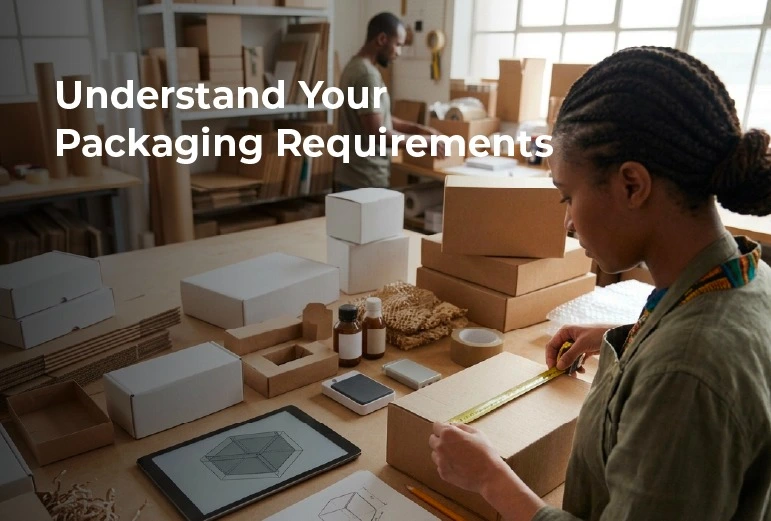
Identifying packaging requirements before selecting a supplier simplifies the evaluation process. Product characteristics, packaging materials, and production volume all determine the type of manufacturer best suited to support business operations.
Type of Product
Every industry has unique packaging requirements based on the product’s weight, fragility, storage conditions, transportation methods, and regulatory standards.
Food Products
Food packaging must preserve freshness, prevent contamination, and withstand transportation while complying with food safety requirements. Corrugated cartons, kraft packaging, and food-grade boxes are commonly used to protect products throughout the supply chain.
Pharmaceuticals
Pharmaceutical products require packaging that maintains product integrity while adhering to strict industry regulations. Packaging must provide accurate dimensions, structural strength, and protection against moisture, contamination, and tampering.
Electronics
Electronic devices are vulnerable to impact, vibration, and static electricity during transportation. Packaging solutions for electronics often include reinforced corrugated cartons, protective inserts, and precisely engineered box designs that minimise movement during shipping.
Cosmetics
Cosmetic products compete aggressively on visual presentation. Packaging must combine structural protection with premium finishing to create an attractive appearance that reflects the product quality and strengthens brand identity.
Industrial Goods
Industrial equipment, machine parts, and heavy products require durable packaging capable of supporting significant weight without collapsing during storage or transportation. Heavy-duty corrugated packaging is commonly used to protect these products throughout distribution.
Packaging Material
The choice of packaging material determines product protection, durability, printing quality, and overall cost. Choosing the right material depends on the intended application and handling conditions.
Corrugated Boxes
Corrugated boxes remain one of the most widely used packaging solutions because they provide excellent compression strength, cushioning, and versatility. They are good for transporting consumer goods, industrial products, agricultural produce, and e-commerce shipments.
Cardboard Boxes
Cardboard boxes provide a lightweight and cost-effective solution for products that require attractive presentation without heavy-duty protection. They are frequently used for retail packaging, promotional items, and lightweight consumer goods.
Kraft Paper Boxes
Kraft paper boxes offer durability while supporting environmentally responsible packaging initiatives. Their natural appearance also appeals to brands that prioritise sustainability and minimal packaging design.
Rigid Boxes
Rigid boxes provide exceptional structural strength and a premium appearance. They are commonly used for luxury products, electronics, jewellery, corporate gifts, and premium cosmetic packaging, where presentation is as important as protection.
Custom Packaging
Standard packaging dimensions do not always provide the most efficient solution. Custom packaging allows businesses to manufacture boxes that fit specific product dimensions, incorporate protective inserts, reduce unused space, and showcase branded graphics, colours, and finishes that strengthen product recognition.
Packaging Quantity
Production requirements should also influence the choice of manufacturer. Not every supplier has the equipment or capacity to handle different order volumes efficiently.
Small Orders
Businesses introducing new products or testing the market often require flexible production runs. Manufacturers able to accommodate smaller quantities allow businesses to validate packaging designs without committing to excessive inventory.
Bulk Production
Large-scale manufacturers require suppliers capable of producing high volumes while maintaining consistent dimensions, printing quality, and delivery schedules. Production consistency becomes increasingly important as order quantities grow.
Custom Orders
Some products require specialised dimensions, unique structural designs, premium printing, embossing, lamination, die-cut windows, or protective inserts. Manufacturers with advanced production capabilities can deliver customised packaging without compromising quality or lead times.
Factors to Consider When Choosing Packaging Companies in Nigeria
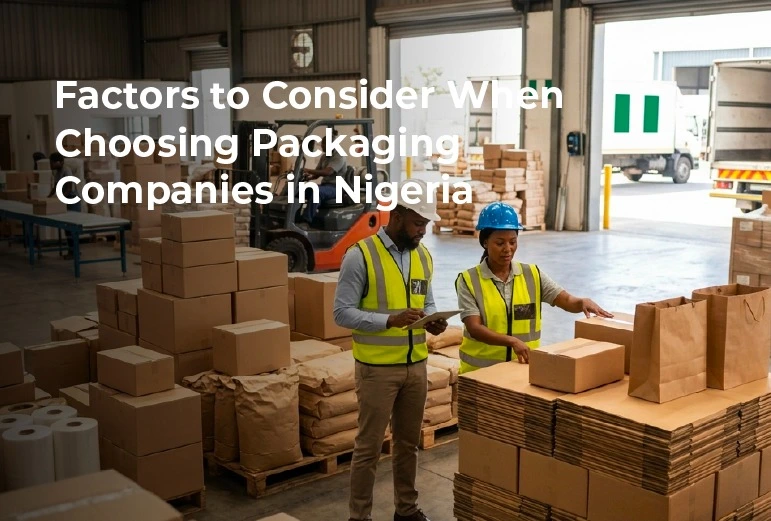
Not every manufacturer offers the same level of expertise, production capability, or quality assurance. Comparing suppliers beyond pricing helps businesses identify production partners that can consistently deliver packaging that meets operational requirements and supports future growth.
Manufacturing Experience
Experience is one of the strongest indicators of manufacturing capability. Companies that have served multiple industries over several years have typically refined their production processes, invested in modern equipment, and developed systems that maintain consistency across every production run.
When evaluating potential suppliers, review the industries they serve, the complexity of their previous projects, and the range of packaging solutions they manufacture. A diverse portfolio demonstrates technical knowledge and the ability to adapt to different product requirements.
Product Quality
Packaging quality directly affects product protection, transportation efficiency, and customer satisfaction. High-quality boxes maintain their structural integrity throughout storage and distribution, reducing the likelihood of damaged products and unnecessary replacement costs.
Reliable manufacturers achieve consistent quality by using premium raw materials, precision manufacturing equipment, and strict quality control procedures. Businesses should also assess the supplier's printing quality, finishing standards, dimensional accuracy, and material consistency before placing large production orders.
Custom Packaging Solutions
Packaging should be designed to fit both the product and the brand. Manufacturers that offer customised packaging solutions give businesses greater flexibility to create packaging that improves presentation while meeting functional requirements.
Look for suppliers capable of producing:
- Custom box dimensions
- Branded printing and graphics
- Corporate colours and logos
- Special finishes such as lamination, embossing, foil stamping, or spot UV
- Die-cut packaging and display boxes
- Protective inserts and internal dividers
Custom packaging creates a more professional appearance while helping products stand out in competitive retail environments.
Production Capacity
Production capacity determines whether a manufacturer can support current demand while accommodating future growth. An experienced supplier should have sufficient machinery, skilled personnel, and operational systems to manage routine production and seasonal increases in demand without compromising quality or delivery schedules.
Questions worth asking include:
- Can production be scaled as demand increases?
- What are the average lead times?
- How quickly can repeat orders be manufactured?
- What contingency plans exist for urgent production requirements?
A manufacturer with strong production capacity becomes a dependable long-term supply partner rather than simply a vendor.
Why Custom Packaging Is Important for Business Growth
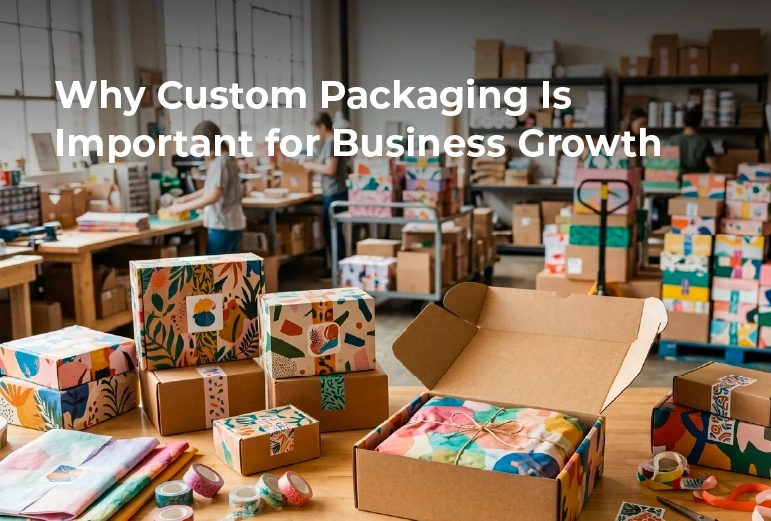
Custom packaging delivers commercial value beyond product protection. It improves brand visibility, strengthens customer perception, and creates opportunities to differentiate products in increasingly competitive markets.
Brand Recognition
Consistent packaging reinforces brand identity across every customer touchpoint. Logos, colours, typography, and design elements become easier for customers to recognise, helping businesses build familiarity over time.
Strong brand recognition supports repeat purchases and improves visibility in both retail stores and online marketplaces.
Professional Appearance
Professionally manufactured packaging signals attention to detail and commitment to quality. Customers often associate well-designed packaging with premium products, making presentation an important factor in purchasing decisions.
Neatly printed boxes with accurate colour reproduction and quality finishing also improve confidence among distributors, wholesalers, and retailers.
Better Customer Experience
Packaging contributes significantly to the overall customer experience. Products that arrive securely packaged and professionally presented create positive impressions that extend beyond the product itself.
For e-commerce businesses in particular, packaging often represents the customer's first physical interaction with the brand, making durability and presentation equally important.
Product Differentiation
Many products compete within crowded retail environments where purchasing decisions are made within seconds. Distinctive packaging helps products attract attention while communicating key brand values and product information.
Unique structural designs, premium finishes, and creative printing techniques enable businesses to distinguish themselves from competing brands.
Marketing Benefits
Packaging functions as a continuous marketing asset throughout the supply chain. Every branded carton transported through warehouses, retail outlets, exhibitions, or customer deliveries increases brand visibility without additional advertising expenditure.
Well-designed packaging also encourages customers to share products on social media, extending brand exposure organically.
Qualities of the Best Packaging Company
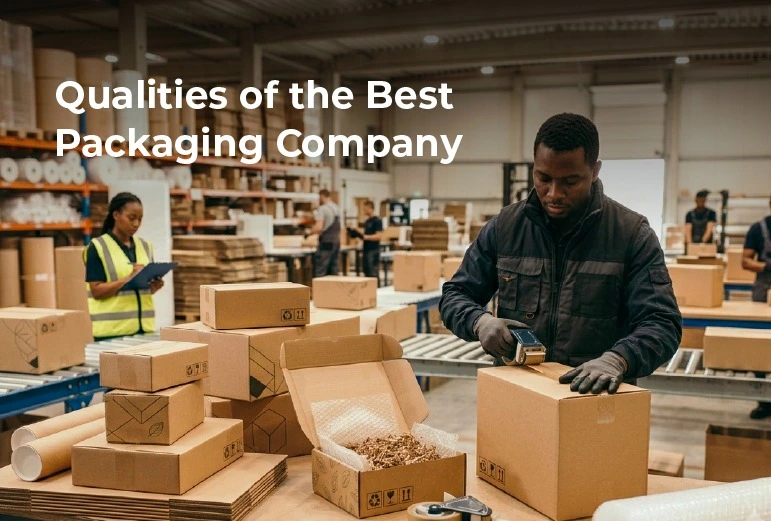
Selecting the best packaging company involves evaluating capabilities that contribute to consistent manufacturing performance rather than focusing solely on pricing.
Industry Experience
Manufacturers with extensive industry experience understand the packaging requirements of different sectors and can recommend practical solutions based on product characteristics, logistics, and regulatory standards.
Advanced Manufacturing Equipment
Modern production facilities equipped with automated converting, printing, die-cutting, laminating, and finishing machinery produce packaging with greater precision, consistency, and efficiency than outdated equipment.
Investment in advanced technology also supports faster production cycles and improved quality control.
Skilled Workforce
Experienced engineers, production operators, designers, and quality assurance personnel contribute directly to product consistency. Technical expertise reduces production errors while ensuring packaging meets required specifications.
Consistent Quality
Reliable manufacturers establish quality standards that remain consistent regardless of order size. Every production batch should meet the same specifications for material strength, printing accuracy, dimensions, and finishing.
Consistency allows businesses to maintain a professional brand image across all markets.
Competitive Pricing
Competitive pricing should reflect overall value rather than simply the lowest quotation. Manufacturers offering durable materials, reliable delivery, and consistent quality often reduce long-term operating costs despite higher initial pricing.
Businesses should evaluate total value, including product lifespan, production reliability, and service quality.
Excellent Customer Support
Responsive communication improves project management throughout the production process. Reliable manufacturers provide accurate quotations, production updates, technical recommendations, and after-sales support whenever required.
Strong customer service also simplifies repeat orders and helps resolve production challenges efficiently.
Sustainable Packaging Solutions
Many businesses are incorporating sustainability into their procurement strategies. Manufacturers offering recyclable materials, responsibly sourced paper products, and environmentally conscious production methods help businesses reduce environmental impact while meeting growing customer expectations.
Common Mistakes to Avoid When Choosing a Box Manufacturer
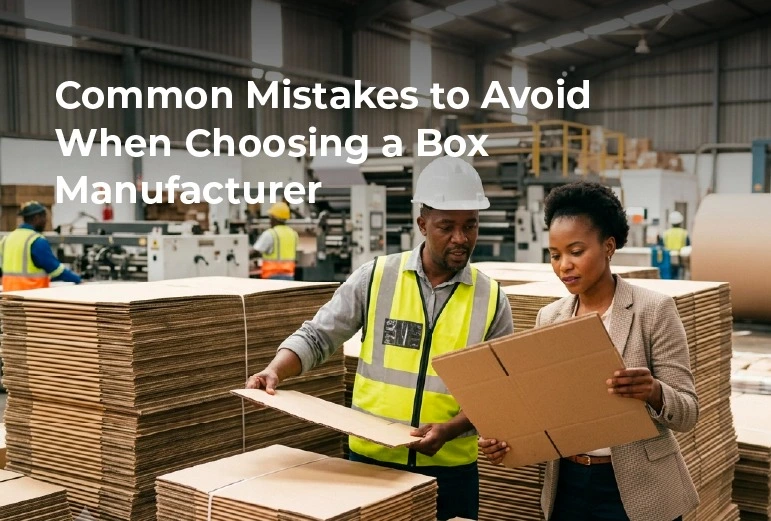
Choosing the wrong supplier can create long-term operational challenges that extend far beyond packaging costs.
Selecting Only Based on Price
The lowest quotation rarely represents the best overall value. Poor-quality packaging often leads to damaged products, customer complaints, production delays, and higher replacement costs.
Purchasing decisions should balance pricing with durability, consistency, manufacturing capability, and service reliability.
Ignoring Product Quality
Businesses sometimes approve suppliers without evaluating sample quality or production standards. Inspecting materials, printing quality, structural strength, and finishing before committing to large production orders reduces the risk of costly mistakes.
Choosing Inexperienced Suppliers
Limited manufacturing experience can result in inconsistent quality, missed deadlines, and production errors. Established manufacturers generally have stronger operational systems and greater technical expertise.
Not Checking Customer Reviews
Customer testimonials, case studies, and industry references provide valuable insight into a manufacturer's reliability, communication, and production performance. Reviewing previous client experiences helps identify suppliers with proven track records.
Overlooking Delivery Timelines
Packaging delays often interrupt manufacturing schedules and product launches. Businesses should confirm realistic production lead times, delivery schedules, and inventory management capabilities before entering long-term agreements.
Ignoring Customisation Options
Packaging requirements evolve as businesses grow. Selecting a manufacturer with limited design capabilities may restrict future branding opportunities and product development initiatives. Working with suppliers that offer extensive customisation provides greater flexibility over time.
Benefits of Partnering with a Reliable Box Manufacturer
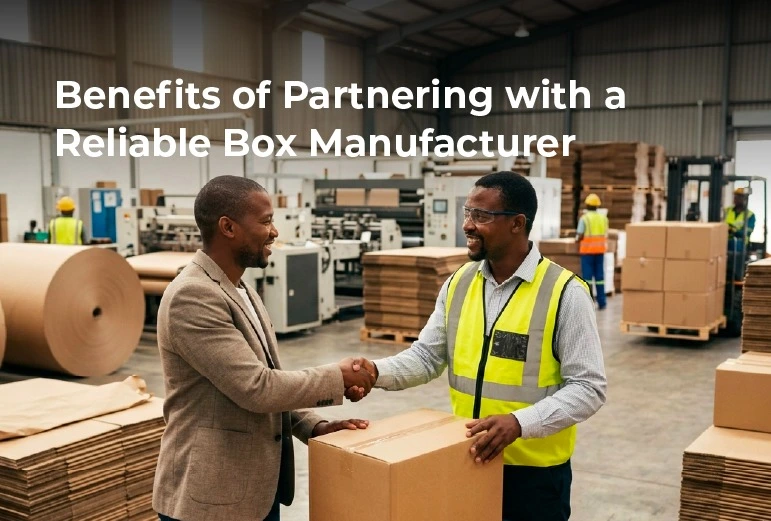
A long-term relationship with an experienced box manufacturer creates advantages that extend beyond the supply of packaging materials. Reliable manufacturers contribute to operational stability, improve product presentation, and support business growth through consistent production and dependable service.
Consistent Product Quality
Consistency is essential in packaging manufacturing. Variations in material strength, box dimensions, or print quality can disrupt production, affect product presentation, and create unnecessary waste.
An established manufacturer follows standardised production processes and quality control procedures to ensure every batch meets the same specifications. This consistency allows businesses to maintain a uniform brand image across all products and markets.
Better Branding Opportunities
Packaging is one of the most visible brand assets a business owns. Professionally manufactured boxes create a strong visual identity that customers recognise across retail shelves, warehouses, and e-commerce deliveries.
Working with a manufacturer that offers advanced printing and finishing capabilities makes it easier to incorporate logos, brand colours, product information, and premium finishes that reinforce brand recognition.
Reduced Product Damage
Products are exposed to stacking pressure, vibration, moisture, and repeated handling throughout the distribution process. Packaging designed with the appropriate materials and structural strength significantly reduces the likelihood of damage during transportation and storage.
Lower damage rates translate into fewer customer complaints, reduced replacement costs, and improved operational efficiency.
Faster Production
Reliable manufacturers operate organised production systems that minimise delays and maintain predictable lead times. Businesses benefit from timely deliveries that keep production schedules on track and reduce the risk of inventory shortages.
For organisations managing seasonal demand or large retail contracts, dependable production schedules are essential for maintaining uninterrupted operations.
Long-Term Cost Savings
While high-quality packaging may involve a greater initial investment, it often reduces costs throughout the supply chain. Durable packaging minimises product damage, reduces waste, lowers replacement expenses, and improves transportation efficiency.
Long-term savings are achieved through improved operational performance rather than lower unit prices alone.
Reliable Inventory Management
Experienced manufacturers understand the importance of maintaining a stable packaging supply. Many offer scheduled production runs, inventory planning, and repeat-order management that help businesses avoid stock shortages without carrying excessive inventory.
Reliable inventory management improves production planning while reducing operational uncertainty.
Industries That Need Professional Packaging Solutions
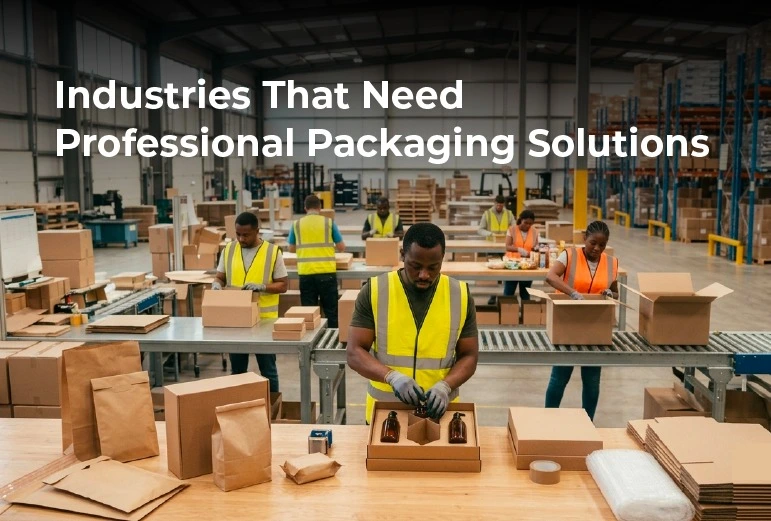
Every industry has unique packaging requirements based on product characteristics, transportation methods, regulatory obligations, and customer expectations. Professional packaging solutions are designed to meet these specific demands while maintaining product integrity throughout the supply chain.
Food and Beverage
Food manufacturers require packaging that preserves freshness, protects products during distribution, and complies with food safety standards. Corrugated cartons, printed cartons, and kraft packaging are widely used for packaged foods, beverages, and agricultural products.
Pharmaceuticals
Pharmaceutical packaging must protect products from contamination, moisture, and physical damage while meeting strict regulatory requirements. Accuracy, consistency, and product traceability are essential throughout the manufacturing process.
Cosmetics
Packaging plays a significant role in the cosmetics industry, where visual presentation influences purchasing decisions. Premium finishes, rigid boxes, and custom-designed cartons help brands communicate quality while protecting delicate products.
Electronics
Electronic products require packaging capable of absorbing shock, preventing movement during transportation, and protecting sensitive components from external damage. Structural integrity and precise box dimensions are particularly important for this sector.
Fast-Moving Consumer Goods (FMCG)
FMCG manufacturers depend on packaging that supports high-volume production, efficient distribution, and attractive retail presentation. Consistency across large production runs is essential for maintaining brand standards and meeting retail requirements.
Retail
Retail businesses require packaging that combines durability with visual appeal. Well-designed boxes improve shelf presentation, simplify storage, and contribute to a better shopping experience.
Agriculture
Agricultural products often travel long distances before reaching consumers. Strong corrugated packaging protects produce from compression, moisture, and handling damage while supporting efficient transportation and storage.
Manufacturing
Manufacturers across multiple sectors rely on industrial packaging to protect machinery, components, spare parts, and finished products throughout domestic and international distribution.
E-commerce
Online retail has increased the demand for packaging that withstands repeated handling during shipping. Durable shipping cartons, custom-sized boxes, and protective inserts help products reach customers in excellent condition while creating a positive unboxing experience.
Industrial Products
Heavy machinery, construction materials, engineering components, and industrial equipment require packaging designed to withstand demanding logistics conditions. Heavy-duty corrugated cartons and customised protective packaging reduce the risk of damage throughout transportation and storage.
Why Businesses Trust Leading Packaging Companies in Nigeria

Businesses depend on packaging suppliers that consistently deliver quality products, reliable service, and scalable manufacturing capabilities. Leading packaging companies in Nigeria distinguish themselves through continuous investment in technology, operational excellence, and customer-focused manufacturing.
Modern Production Facilities
Advanced manufacturing facilities improve production accuracy, increase efficiency, and maintain consistent quality across every order. Automated converting, printing, die-cutting, and finishing equipment enables manufacturers to produce packaging that meets demanding commercial standards while reducing production errors.
Innovative Packaging Solutions
Packaging requirements continue to evolve as industries introduce new products and changing consumer expectations influence purchasing behaviour. Leading manufacturers invest in product development, engineering expertise, and design innovation to create packaging solutions that improve functionality, efficiency, and visual appeal.
High Manufacturing Standards
Consistent manufacturing standards ensure every box meets established specifications for strength, dimensions, printing quality, and finishing. Comprehensive quality control procedures help eliminate defects before products leave the production facility, providing businesses with confidence in every order.
Reliable Customer Service
Professional customer service strengthens long-term business relationships. Leading manufacturers provide clear communication throughout quotation, design, production, and delivery, ensuring customers receive accurate information, timely updates, and responsive support whenever required.
Custom Packaging Expertise
Businesses rarely have identical packaging requirements. Experienced manufacturers work closely with clients to develop customised solutions that reflect product specifications, branding objectives, and distribution requirements. This collaborative approach produces packaging that supports both operational performance and market positioning.
Long-Term Business Partnerships
The strongest supplier relationships are built on consistency, transparency, and mutual growth. Businesses continue working with established packaging manufacturers because dependable production, reliable delivery, and consistent product quality reduce operational risk and simplify long-term planning.
Selecting the right packaging supplier requires more than comparing quotations. Manufacturing experience, product quality, production capacity, customisation capabilities, and service reliability all influence the long-term value a supplier delivers. Businesses that evaluate these factors carefully are better positioned to reduce operational costs, protect their products, strengthen their brand, and maintain an efficient supply chain.
Among the many packaging companies in Nigeria, the most reliable manufacturers combine technical expertise with modern production facilities, strict quality control, and the flexibility to deliver customised packaging solutions for different industries. Their ability to produce durable, well-designed packaging consistently makes them valuable partners rather than simply product suppliers.
Partnering with an experienced packaging manufacturer provides businesses with the confidence that every order will meet the required standards for quality, functionality, and timely delivery. As production demands increase and markets become more competitive, working with a trusted manufacturing partner helps businesses maintain operational efficiency, improve customer satisfaction, and build a stronger foundation for sustainable long-term growth.
Frequently Asked Questions
Selecting the right packaging manufacturer starts with assessing your product requirements, material specifications, production volumes, and growth targets. Evaluate suppliers based on manufacturing experience, quality assurance, production capacity, lead times, customization options, and customer support.
Custom packaging creates a distinctive brand identity, enhances shelf appeal, and protects products with tailor-made dimensions. It signals professionalism, improves unboxing experiences, and differentiates products in competitive retail and e-commerce spaces.
Corrugated boxes provide the best compression strength, cushioning, and durability for shipping and storage. Rigid boxes offer premium presentation for luxury items, while cardboard and kraft paper boxes are cost-effective for lightweight retail and eco-friendly packaging.
The most frequent mistakes include choosing suppliers based solely on lowest price, skipping sample inspections and quality evaluations, selecting inexperienced vendors, underestimating delivery lead times, and ignoring customization requirements.
Professional packaging solutions are widely utilized across FMCG, food and beverage, pharmaceuticals, cosmetics, electronics, retail, agriculture, manufacturing, e-commerce, and industrial goods sectors in Nigeria.
Looking for High-Quality Packaging Solutions in Nigeria?
Partner with Quantum Packaging Nigeria for corrugated cartons, mono-cartons, custom product packaging, and reliable packaging manufacturing for your business.