


TMT Rebars and Ordinary Iron Rods: Which Is Better for Nigerian Construction
The "skeleton" of a building determines its lifespan and safety in the construction industry. The quality of the reinforcement steel chosen is the single most important factor in ensuring structural integrity. For years, builders have debated the merits of TMT rebars and ordinary iron rods. Still, as building standards evolve and safety becomes a non-negotiable priority, the industry is shifting toward more advanced materials. Selecting the best steel for construction requires an understanding of how different metals react to Nigeria’s unique environmental challenges, ranging from the high humidity of the coastal south to the intense heat of the northern regions. In an environment where humidity threatens foundations and substandard materials are common, choosing TMT rebars over ordinary iron rods is the most critical decision a developer can make. This guide explains why TMT rebars have become the non-negotiable standard for structural safety and why the choice between TMT bars and iron rods will ultimately determine if a building stands for decades or becomes another statistic. It explores the technical and practical differences between TMT bars and iron rods to help make an informed decision for any next project.
What Are TMT Rebars?
TMT stands for Thermo-Mechanically Treated. These types of bars represent a massive leap in metallurgical technology compared to traditional methods. TMT rebars in Nigeria are manufactured through a specialized process: as steel bars emerge from the rolling mill, they are rapidly cooled with high-pressure water jets in a process called quenching. This process creates a unique composite structure: a hard, high-strength outer surface (martensite) and a soft, ductile inner core (ferrite-Pearlite).
The hardened outer layer allows these bars to support significantly higher loads, which is why they are considered the best steel for construction in Nigeria for multi-storey developments. Despite their incredible strength, the soft core allows the bars to bend without snapping, a quality known as ductility that is critical for absorbing structural stress. Furthermore, TMT rebars in Nigeria are treated to resist rust, which prevents the internal expansion of metal within concrete that causes structural failure in humid climates. Because they have a low carbon content, TMT bars can be easily welded into complex cages without losing their structural properties, making them far superior to traditional iron rods.
What Are Ordinary Iron Rods?
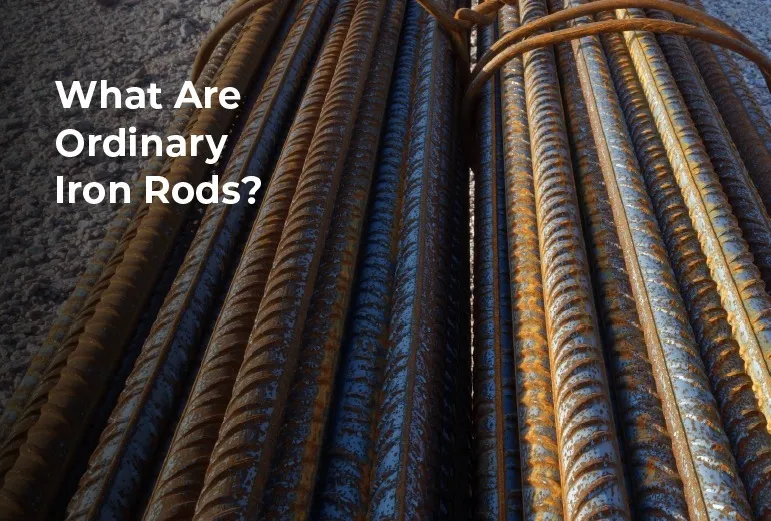
Ordinary iron rods, often referred to in local markets as cold-twisted or local rods, are produced using older, more traditional methods. Unlike modern TMT steel, these rods do not undergo a controlled thermal treatment. Instead, they are often strengthened by cold twisting or basic rolling at room temperature. While these rods have been a staple in the past, they come with significant drawbacks in the modern era, particularly when analyzed alongside TMT rebars and ordinary iron rods.
One of the primary limitations is their low tensile strength. Compared to TMT bars and iron rods, the ordinary variety has a much lower yield strength, meaning a builder would actually need a higher volume of steel to achieve the same load-bearing capacity. Additionally, the cold-twisting process leaves the metal under constant internal stress, making the rods brittle. Instead of bending under extreme weight or ground shifting, ordinary rods are prone to snapping without warning. They also lack the protective martensitic layer found in TMT rebars, which means when they are exposed to moisture or coastal salt air, they oxidize rapidly, causing the surrounding concrete to crack and peel.
Key Differences and Performance
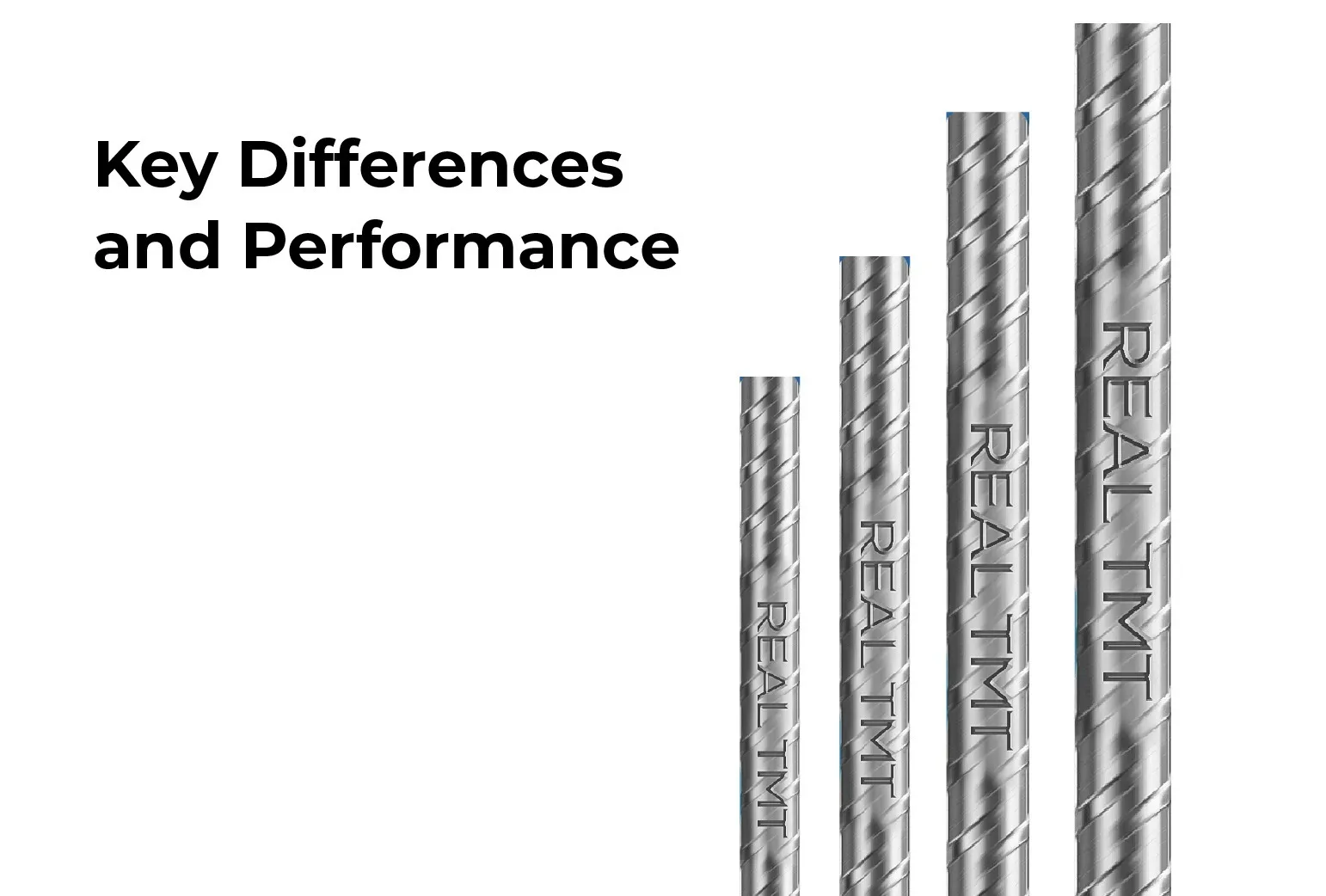
To understand why the market is moving toward a specific standard, we need to compare TMT rebars' performance against ordinary iron rods across critical metrics. TMT bars are manufactured using heat and rapid quenching, while ordinary rods rely on basic rolling. This difference in production creates a significant gap in strength and safety. Engineers often find they can reduce steel usage by up to twenty percent when switching to TMT rebars, as the material delivers substantially more strength per millimeter than ordinary iron rods.
When evaluating the best steel for construction in Nigeria, the long-term value becomes clear. While ordinary rods are cheaper per bar, they require a higher quantity to reach safety standards and lead to more expensive repairs over time due to corrosion. TMT bars, on the other hand, offer high yield strength and excellent bonding with concrete due to their precise ribbing. In the debate of TMT bars against iron rods, the thermal-mechanical process wins by providing a material that is both stronger and more flexible.
Which Is Better for Nigerian Construction?

The Nigerian environment is uniquely demanding on building materials. From the salt spray of the Atlantic Ocean in the south to the seismic tremors occasionally felt in the Middle Belt, the choice between TMT bars and iron rods will determine the safety of the occupants. Nigeria’s high humidity is a death sentence for inferior steel; ordinary iron rods begin to corrode as soon as they are stored on a construction site. Once they are cast in concrete, that rust continues, causing the concrete to spall. TMT rebars in Nigeria are specifically engineered to resist atmospheric corrosion, ensuring the building’s structural "skeleton" remains strong and durable for decades.
Furthermore, building safety is a major concern. The most tragic building collapses in the country are often sudden failures caused by brittle ordinary iron rods snapping instantly under load. TMT rebars offer a warning sign because they are ductile, meaning they will stretch and bend before failing, providing a critical window for evacuation. While lower prices often tempt developers to choose ordinary rods, the best steel for construction is actually the one that requires the least maintenance and offers the highest safety profile. Choosing TMT rebars over ordinary iron rods ensures the building’s structural integrity endures over time, protecting both the property’s resale value and the safety of its occupants.
For any modern construction project in Nigeria, TMT rebars are a safer, stronger choice. Buildings today are expected to last many years, carry heavy loads, and withstand harsh weather conditions. To achieve this, the materials used must be dependable over time. This is where TMT rebars stand out clearly.
Ordinary iron rods can still be used for small projects, temporary structures, or areas that do not carry excess weight. However, for houses, offices, shops, and multi-storey buildings, they fall short. These rods are more prone to rust, weaken, or fail under pressure, especially when exposed to rain, heat, and moisture over an extended period. When comparing TMT rebars and ordinary iron rods, the difference becomes. TMT rebars are stronger, meaning they can safely support more weight without breaking. They are also more flexible, so instead of snapping suddenly, they bend and give warning signs when a structure is under stress. This significantly enhances safety for both the structure and occupants.
Another important advantage is rust resistance. Over time, rust weakens metal and causes concrete to crack. TMT rebars slow this process, helping buildings stay solid for many years with fewer repairs. Ordinary iron rods are prone to rusting more quickly, which can lead to maintenance and even serious structural damage. While ordinary iron rods may seem cheaper at the start, the savings rarely last. Repairs, reinforcements, and safety risks can quickly exceed the initial cost savings. TMT rebars, on the other hand, offer peace of mind. They help builders and property owners save money over time by minimising maintenance needs and significantly extending the structure’s lifespan.
In simple terms, choosing TMT rebars is an investment in strength, safety, and durability. For anyone building with the future in mind in Nigeria, they remain the smarter and more responsible option.
When comparing TMT rebars to ordinary iron rods, there is a clear difference. TMT rebars offer superior strength, flexibility, corrosion resistance, and safety, making them ideal for Nigeria’s construction environment. While ordinary iron rods may seem cheaper, they come with higher risks and long-term costs.
Construction is mostly about creating structures that will serve people today and remain dependable tomorrow. Using quality materials plays a major role in achieving this. TMT rebars provide the strength and reliability needed to support that vision, helping you build with confidence and purpose. Rather than dealing with early damage, constant repairs, or hidden safety risks, work towards setting a solid foundation for long-term durability and confidence. This is why many experienced builders and developers prefer working with trusted steel brands like Quantum Steels Nigeria Limited, known for supplying high-quality, reliable TMT bars that meet modern construction needs.
For superior steel in Nigerian construction, always choose high-grade TMT bars—this guarantees your building will stand the test of time. Contact Quantum Steels today by sending your enquiries through our representatives or call +234 8150895614 to get started.
Looking for high-quality BRC wire mesh in Nigeria?
Partner with a trusted supplier for durable reinforcement, consistent quality, and fast bulk delivery for your infrastructure projects.